Signed in as:
filler@godaddy.com
Signed in as:
filler@godaddy.com
L-Blend introduces a new class of alcohol-free, wine-based functional beverages, combining the naturally complex polyphenol profile of red wine with selected dietary fibres.
Red dry wine is a distinctive source of polyphenols, offering a broad spectrum of bioactive compounds with very little sugar and without the high calorie load of some other polyphenol-rich foods. L-Blend is designed to preserve this valuable wine matrix while removing the alcohol.
The selected fibres add further functionality: helping to preserve wine-like aroma and mouthfeel, while also supporting a lower glucose response after starch-containing meals.
Explore the science behind wine polyphenols, glucose response, and taste & mouthfeel below.

Why L-Blend Fibre Helps Reduce Blood Glucose Rise After Starchy Meals
How L-Blend Fiber Helps Preserve the Taste of Wine
Red wine is a remarkably complex natural source of polyphenols. Rather than providing one “hero” molecule, it contains a broad spectrum—including flavan-3-ols and tannins, anthocyanins, flavonols, phenolic acids and resveratrol. Together, these compounds also help shape wine’s colour, structure, bitterness and mouthfeel.
This diversity may matter. Research comparing grape and wine extracts suggests that a complex mixture of polyphenols may produce biological effects that are not necessarily reproduced by individual compounds or simpler mixtures.
Wine polyphenols may support our body in several connected ways. They can help protect cells from oxidative stress and calm excessive inflammatory signals. They may also help keep platelets—the tiny blood cells involved in clotting—from becoming overly active. Wine polyphenols may also support the inner lining of our blood vessels, helping the body produce nitric oxide—a molecule that allows blood vessels to relax and supports healthy blood flow. Together, these effects help explain why wine polyphenols are of particular interest in cardiovascular research.
What makes dry red wine particularly interesting is how these polyphenols are delivered: a broad natural spectrum with very little residual sugar. Unlike many fruit-based sources, it does not require a high sugar load; unlike polyphenol-rich foods such as olive oil, it does not come with a high amount of fat and calories.

While cardiovascular protection gets most of the attention, human clinical studies reveal wine polyphenols may influence gut bacteria, skin, brain, mood, oral health, and metabolism. Here are science-backed highlights, based only on studies in real people.
Queipo-Ortuño et al., 2012, American Journal of Clinical Nutrition. In 10 healthy men, four weeks of daily red wine polyphenol intake significantly increased beneficial gut bacteria (Bifidobacterium, Bacteroides, Prevotella) and lowered blood pressure, triglycerides, and C-reactive protein.
Belda et al., 2021, Food & Function. In a 19-person study, people whose bodies were most efficient at processing wine polyphenols ("high metabolizers") showed a measurable increase in Akkermansia, a gut bacterium associated with a healthy intestinal lining and better metabolic health, after moderate wine intake.
Christman & Gu, 2026, presented at NUTRITION 2023 (American Society for Nutrition). In a 6-week randomized crossover trial with 17 women aged 40-67, dealcoholized muscadine wine significantly improved skin elasticity and reduced water loss through the skin, compared to placebo.
Ammar et al., 2020, Journal of Clinical Medicine, meta-analysis. Pooled human trial data showed that polyphenol intake significantly boosted brain-derived neurotrophic factor (a protein tied to learning and memory) and reduced mental fatigue.
The dietary fibre in L-Blend is alpha-cyclodextrin, a soluble fibre produced from starch. L-Blend contains 4 g per 100 ml, providing 10 g in one 250 ml serving. Alpha-cyclodextrin has a neutral taste and dissolves in liquid, making it especially suitable for beverages.
Alpha-cyclodextrin has an authorised EU health claim: “Consumption of alpha-cyclodextrin contributes to the reduction of the blood glucose rise after starch-containing meals.”
The beneficial effect is obtained by consuming at least 5 g of alpha-cyclodextrin per 50 g of starch as part of the meal. One 250 ml serving of L-Blend provides 10 g of alpha-cyclodextrin—twice the minimum quantity specified for a meal containing 50 g of starch.
In a clinical study Bär et al. (2020) involving 12 healthy men, participants ate white bread providing 50 g of starch. When the bread was consumed with 10 g of alpha-cyclodextrin—the same quantity found in one serving of L-Blend—the overall rises in blood glucose and insulin were reduced by 59% and 57%, respectively.
These results suggest that alpha-cyclodextrin helps starch to be digested more slowly, allowing glucose to enter the bloodstream more gradually.

Wittkowski, K. M. (2022) systematic meta-analysis combining five published clinical trials reached a similar conclusion: consuming 5–10 g of alpha-cyclodextrin with a meal containing approximately 50 g of starch reduced the rise in blood glucose after eating. Importantly, this effect was not accompanied by an increase in insulin levels, suggesting that alpha-cyclodextrin works by slowing starch digestion rather than stimulating the body to produce more insulin.
Starch must first be broken down by the digestive enzyme alpha-amylase before its glucose can be absorbed. Alpha-cyclodextrin interacts with this enzyme and temporarily slows the breakdown of starch.
This explains why alpha-cyclodextrin is particularly relevant when L-Blend is enjoyed with starch-containing foods, such as bread, rice, pasta or potatoes. Emerging research also suggests that alpha-cyclodextrin may support feelings of fullness and reduce the desire for the next meal (Binou et al., 2022.
Alpha-cyclodextrin is not digested in the small intestine. Instead, it reaches the colon, where it can be fermented by gut bacteria. A review by Gościniak et al. (2024) reports that cyclodextrins may encourage beneficial bacteria—including Bacteroides and Bifidobacterium—and support the production of short-chain fatty acids important for the intestinal environment. However, much of this evidence remains preclinical, and more human studies are needed
In a randomized, placebo-controlled study of 81 physically active, non-athlete men, Onishi et al. (2025) found that taking 1 g of alpha-cyclodextrin daily for nine weeks improved performance in a 10 km cycling trial. Participants also reported less fatigue after exercise and had a lower increase in heart rate during activity. Researchers suggest that fermentation by gut bacteria may contribute to these effects, although the precise mechanism is still being investigated. Read the publication
Alcohol contributes more than warmth to wine: it helps carry aromas, softens acidity and gives wine body. During dealcoholization, some delicate volatile compounds can be lost, leaving the drink thinner, sharper and less aromatic (Akhtar et al., 2025).
Alpha-cyclodextrin has a ring-shaped molecular structure with a tiny inner cavity. This cavity can temporarily hold certain volatile aroma molecules, helping protect them from evaporation, heat and oxidation during processing and storage. Research has shown that alpha-cyclodextrin can be particularly effective at retaining volatile flavour compounds over time (Reineccius et al., 2002)
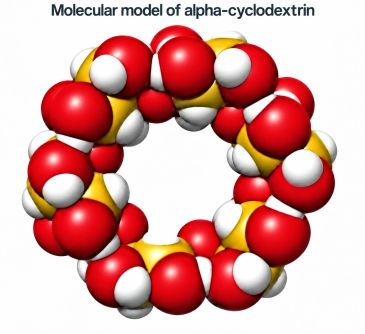
Removing alcohol can also reduce the fullness and smoothness associated with wine. As a soluble dietary fibre, alpha-cyclodextrin adds structure to L-Blend and helps create a rounder, fuller mouthfeel—without relying on added sugar. It can also interact with some bitter or harsh-tasting compounds, contributing to a more balanced finish.
Alpha-cyclodextrin does not introduce a new flavour of its own. Instead, it acts as a quiet supporting ingredient: helping preserve selected aromas, restore body and soften the sensory changes caused by alcohol removal. The result is a non-alcoholic drink that retains more of the complexity and character people associate with wine.
L-Blend SIA
Talsu nov., Rojas pag., Ģipka, "Vītenāji", LV-3264, Latvia, registration number 40203525766
Copyright © 2026 www.lblend.life - All Rights Reserved.